Ever thought about how much time you waste reaching for your mouse? Every click adds up, slowing down your productivity. Using your mouse for everything means you’re not working at your best.
Learning keyboard shortcuts is key for office pros. These shortcuts help you move quickly and accurately. By typing instead of clicking, your work flows smoothly.
Using these shortcuts isn’t just about being fast. It’s about staying focused. Once you make these keyboard shortcuts part of your routine, your productivity will soar. It’s time to level up your navigation skills.
Key Takeaways
- Reduce your reliance on the mouse to save valuable time.
- Learn essential key combinations to navigate software faster.
- Boost your daily output by streamlining repetitive digital tasks.
- Transition from a standard user to a highly efficient power user.
- Improve your focus by keeping your hands on the keys.
Mastering the Fundamentals of Keyboard Navigation
Stepping away from your mouse is a big step towards becoming a power user. Using keyboard shortcuts lets you do things much faster than clicking menus. This way, you can keep your eyes on the screen and your hands in a natural typing position.
Understanding Global Hotkeys and System Shortcuts
Both Windows and macOS have great global hotkeys to make your work easier. These shortcuts work in almost every app, letting you switch windows, open search bars, or close programs quickly. Learning these shortcuts is key to navigating your system efficiently.
Many people don’t know about using “Command” or “Control” keys with function keys. For example, using these keys to switch between apps saves you from reaching for your mouse. Once you get the hang of it, you’ll do tasks much faster every day.
Customizing Your Browser for Faster Input
Your web browser is where you spend a lot of time, making it a great place for custom hotkeys. Most browsers let you set up special keys for common actions, so you can do things with just one touch. This makes your browser super fast and efficient.
Think about setting up keys for refreshing pages, opening new tabs, or clearing your cache. Customizing your navigation settings means you won’t have to do the same actions over and over. Customization helps create a setup that fits your unique browsing style perfectly.
Optimizing Your Workflow with AI Porn Search Shortcuts
In today’s digital world, being efficient means not needing a mouse to search. By using ai porn search shortcuts, you can quickly find what you need. These shortcuts help you stay focused and move through your browser fast.
Navigating Search Results with Precision
Use simple keyboard commands to move through search results. Instead of scrolling, press “Tab” to move between links and “Enter” to choose. This makes scanning large lists much faster.
- Use “Ctrl + F” to find specific keywords on a page.
- Press “Spacebar” to scroll down one full screen.
- Utilize “Shift + Spacebar” to scroll back up instantly.
Using Keyboard Commands to Filter Content
It’s important to refine your search results for a better experience. Use specific operators in your browser‘s address bar to narrow down your search. These commands act as filters, removing unwanted data.
| Command | Function | Benefit |
|---|---|---|
| site: | Limit to domain | Targeted results |
| -keyword | Exclude terms | Cleaner feed |
| “exact” | Match phrase | High precision |
Implementing Rapid Search Queries for Efficiency
To master ai porn search shortcuts, learn your most common search patterns. Create a standard way to input your searches. This proactive approach keeps your browsing smooth and free from unnecessary steps.
Advanced Browser Navigation Techniques
Advanced browser navigation is key for high-productivity users. Switching from mouse to keyboard makes web interaction faster. It’s like using a task manager or a file explorer, making complex tasks easier.
Managing Tabs and Windows Like a Pro
Handling many open tabs can be overwhelming. Use keyboard shortcuts to manage them. Pressing Ctrl + T (or Cmd + T on Mac) opens a new tab. Closing one is easy with Ctrl + W.
Don’t worry if you close a tab by mistake. Press Ctrl + Shift + T to get it back. This saves time when you’re working with many tabs.
Utilizing Address Bar Shortcuts for Instant Access
The address bar is more than a URL field. It’s a command center for your browser. Press Alt + D or Ctrl + L to highlight it quickly.
“Efficiency is doing things right; effectiveness is doing the right things.”
With the bar highlighted, you can type search queries or go to specific sites. This keeps your hands on the home row, making navigation smooth.
Mastering History and Bookmark Navigation
Getting to your past activity or bookmarks should be easy. Use Ctrl + H for history or Ctrl + D to bookmark a page quickly. These shortcuts are like hotkeys in a file explorer.
Here’s a table with essential commands for better browser use:
| Action | Windows Shortcut | macOS Shortcut |
|---|---|---|
| New Tab | Ctrl + T | Cmd + T |
| Close Tab | Ctrl + W | Cmd + W |
| History | Ctrl + H | Cmd + Y |
| Bookmark Page | Ctrl + D | Cmd + D |
Using these commands regularly will cut down on repetitive actions. Learning these tools is the first step to better navigation efficiency.
Leveraging NSFW Shortcuts for Streamlined Browsing
Modern power users use custom key bindings to navigate media fast and precise. Standard mouse navigation is slow and inefficient on media-heavy platforms. Nsfw shortcuts make browsing these sites quick and smooth.
Configuring Custom Key Bindings for Media Sites
Many media platforms are hard to navigate with just a keyboard. Tools like Vimium or custom userscripts help by mapping actions to keys. This way, you can jump between galleries, play media, or scroll feeds without your mouse.
First, list the actions you do most on your favorite sites. Then, assign simple keys to these actions in your browser settings. This saves time and effort in your daily browsing.
Automating Navigation Tasks with Browser Extensions
Specialized extensions can automate tasks for you. They connect your commands to the site’s code, speeding up tasks. You can create macros to filter content or load images quickly with one keystroke.
These extensions keep your browser fast, even with lots of media. They make the boring parts of browsing easier, so you can focus on what’s important. This control is key for those who want to be productive.
Managing Privacy and Incognito Modes via Keyboard
Keeping your privacy is crucial when exploring sensitive content. You don’t need to go through menus to open a private window. Most platforms let you open private windows with a quick keyboard command.
Learning these shortcuts keeps your privacy safe without breaking your flow. Whether you’re using Chrome, Firefox, or Brave, a few keys open a new, private window. Having these nsfw shortcuts ready is the best way to browse safely and discreetly.
Building a High-Efficiency Power Workflow
To build a high-efficiency power workflow, change how you use your digital tools. Focus on using your keyboard instead of the mouse. This saves seconds that add up to hours of time saved each week. It’s key to modern productivity, making complex software easy to use.
Integrating Keyboard Macros into Your Daily Routine
Keyboard macros are the heart of your efficiency. Tools like AutoHotkey for Windows or Keyboard Maestro for macOS let you create shortcuts. These shortcuts do tasks like filling out forms or opening apps quickly.
“Efficiency is doing things right; effectiveness is doing the right things.”
Synchronizing Shortcuts Across Multiple Devices
Keeping your power workflow the same on all devices is crucial for productivity. Save your custom settings in the cloud. This way, your shortcuts work the same everywhere, avoiding the hassle of relearning them.
Reducing Mouse Dependency for Faster Task Completion
The goal is to use your keyboard more and the mouse less. Every time you use the mouse, you lose speed. Learning browser commands and system hotkeys keeps you focused. This makes your power workflow much faster.
| Task Type | Manual Method | Keyboard Shortcut | Efficiency Gain |
|---|---|---|---|
| Tab Management | Click and Drag | Ctrl + Tab | High |
| Text Selection | Mouse Highlight | Ctrl + Shift + Arrow | Very High |
| App Switching | Taskbar Click | Alt + Tab | Medium |
| Search Focus | Click Address Bar | Ctrl + L | High |
Essential Operating System Shortcuts for Power Users
Learn these essential system-level shortcuts to take full control of your digital world. Mastering your operating system saves time and boosts daily output. By using your keyboard more, you’ll navigate faster across your workspace.
Windows System Navigation Essentials
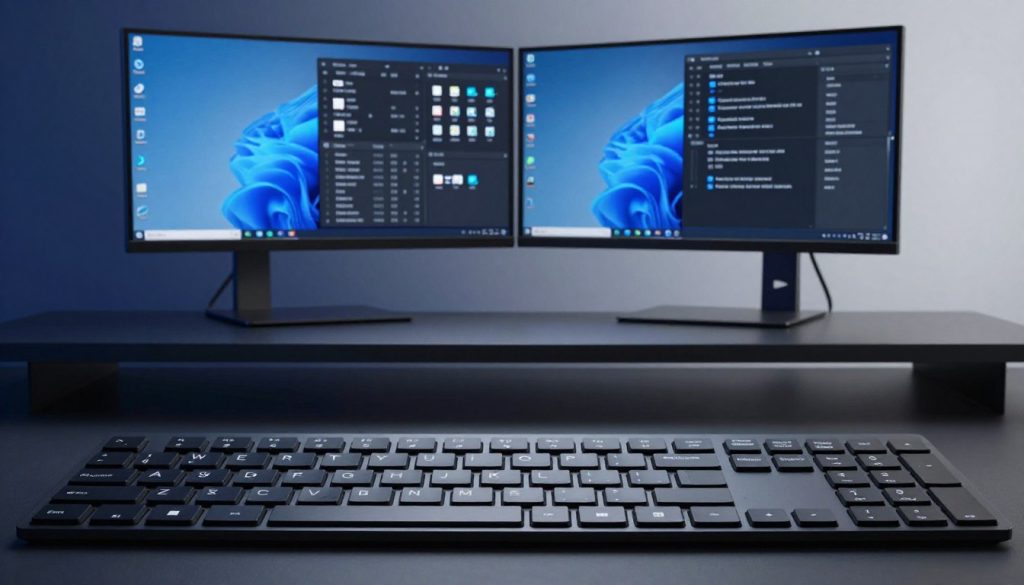
If you use windows, your keyboard is key for managing your system. Press Win + E to open File Explorer quickly. For frozen systems, Ctrl + Shift + Esc opens the task manager to stop issues fast.
macOS Shortcuts for Enhanced Productivity
macos users find efficiency in its core. Use Command + Space for Spotlight, your app and file launcher. Press Command + Option + Esc to open Force Quit and fix frozen apps.
Managing Virtual Desktops with Keyboard Commands
Virtual desktops keep your projects organized. On windows, create a new desktop with Win + Ctrl + D. Switch between them with Win + Ctrl + Left or Right Arrow.
macos users use Mission Control for space management. Swipe up with three fingers or press Control + Up Arrow to see all windows. These shortcuts help you stay efficient, no matter your OS.
Advanced Search Engine Manipulation
Learning to use a search engine better can save you a lot of time. You can filter out unwanted content and find what you need fast. This skill is crucial for anyone wanting to work more efficiently online.
Using Boolean Operators for Targeted Results
Boolean operators help you find exactly what you’re looking for. Quotation marks search for exact phrases. The minus sign removes unwanted terms. The “OR” operator lets you search for related topics.
Using ai porn search shortcuts with these operators makes your search even faster. You get only the most relevant results. This saves you from looking through lots of useless links.
Refining Search Parameters with Keyboard Inputs
You can also use keyboard shortcuts to refine your search. For example, “filetype:pdf” or “site:example.com” limits your search to certain types or sites. It’s like using filters in your file explorer to find files.
Consistency is important when using these shortcuts. Quick typing keeps your workflow fast. These small changes can save you a lot of time every day.
Saving Search Filters for Future Use
Save your complex search queries to avoid redoing them. Most browsers let you bookmark search results pages. This creates a custom shortcut for your most used searches. Browser extensions can also store your favorite search strings for easy access.
Organizing these saved filters makes your research more efficient over time. Setting these up now will save you time every time you need to search again.
Troubleshooting Common Shortcut Conflicts
Even the most efficient power users sometimes face frustrating command clashes. When you press a sequence and nothing happens, or the wrong window responds, it’s likely a software conflict. Knowing how to diagnose these issues helps keep your workflow smooth.
Identifying Overlapping Hotkeys
Finding the source of interference is the first step to fixing a problem. Often, a background application or a browser extension tries to use the same hotkeys as your operating system. You might notice this when a command works in one program but not in another.
Check your active task manager to see which programs are running in the background. If you’ve recently installed new software, it might have taken over your standard Windows shortcuts. Keeping a list of your custom bindings helps you quickly find the troublemaker.
Resolving Conflicts Between Browser and OS
Conflicts between your browser and the operating system are common, especially with advanced navigation commands. If your browser captures a command meant for the system, you might need to adjust your browser extension settings. Many modern browsers let you toggle specific hotkeys to “Global” or “In-Chrome Only” modes.
If the issue still persists, consider remapping the conflicting command within the application settings. Most professional-grade software allows you to customize your input map. By changing one key in the sequence, you can prevent the OS from intercepting your intended action.
Resetting Default Settings When Necessary
Sometimes, the best approach is to start fresh. If you’ve modified too many settings and can no longer track the source of a conflict, resetting your configuration is the safest path. Most applications include a “Restore Defaults” button in their preferences menu.
Resetting ensures your Windows environment returns to a stable state. You can then re-apply your custom commands one by one to ensure no new conflicts arise. This methodical approach saves time and prevents future headaches.
| Conflict Type | Primary Symptom | Recommended Fix |
|---|---|---|
| Global Overlap | Command triggers wrong app | Change custom binding |
| Browser Extension | Shortcut fails in browser | Disable extension hotkeys |
| OS Interference | System menu opens instead | Update OS shortcut map |
| Corrupted Config | Unpredictable behavior | Reset to default settings |
Security and Privacy Best Practices
Privacy is key for a smooth power user experience. While you work on making your workflow better, keep your personal data safe. Adding security habits to your routine helps avoid sharing sensitive info by mistake.

Securing Your Browsing History and Cache
It’s important to control your digital trail for privacy. Most browsers let you clear your cache and history quickly with certain commands. Clearing these files often stops others from seeing your past online activities.
“Security is not a product, but a process.”
For a clean slate, use private browsing modes. You can start these with hotkeys. This way, your browsing history won’t save to your computer.
Using Keyboard Shortcuts for Quick Screen Locking
Keeping your computer safe is as important as protecting your online data. Locking your screen when you leave is crucial. On macos, use Control + Command + Q to lock it fast.
Windows users can lock their screen with the Windows key plus L. Learning these hotkeys keeps your session private, even when you’re not there.
Managing Password Managers with Hotkeys
Using a password manager keeps your online accounts safe. You can quickly open your vault with hotkeys. This way, you don’t have to type in your login details.
These tools protect you from data theft. Make sure your vault locks automatically after you’re not using it. Whether you’re on Windows or macos, these steps strengthen your security.
Ergonomics and Long-Term Productivity
True productivity means taking care of your body as much as your skills. Mastering shortcuts makes you more efficient, but long hours can hurt your health. Adding ergonomics to your day keeps you performing well without harming your body.
Maintaining Proper Posture During Intensive Sessions
Your setup is key to avoiding fatigue. Make sure your monitor is at eye level to avoid neck pain. Your chair should support your back, and your feet should be flat to keep blood flowing.
Here are some key adjustments for your workspace:
- Keep your elbows at a 90-degree angle while typing.
- Position your screen about an arm’s length away from your face.
- Use a footrest if your chair height forces your feet to dangle.
Customizing Keyboard Layouts for Comfort
Standard keyboards might not fit the needs of power users. Changing your keyboard layout can make you more efficient by cutting down on finger movement. Many switch to mechanical keyboards with split designs to keep their wrists straight.
Software can also help by remapping keys. This puts your most-used shortcuts where they’re easy to reach. It helps you work faster without straining your hands.
Preventing Repetitive Strain Through Efficient Input
Repetitive strain injuries are a big risk for those who spend a lot of time on computers. To stay productive long-term, take regular breaks. Even a short break every hour can help prevent muscle tension.
Here are some habits to keep you healthy:
- Perform gentle wrist and finger stretches between tasks.
- Avoid resting your wrists on hard desk edges while typing.
- Use a soft wrist rest to maintain a neutral angle for your hands.
Combining good physical habits with technical skills makes a lasting system. Remember, your body is your most important tool for staying efficient over time.
Conclusion
Building a high-performance computing environment takes dedication and practice. You now have the tools to make Windows and macOS systems more powerful with keyboard shortcuts.
Using these commands daily makes complex tasks simple and fast. You’ll spend less time navigating menus or searching for browser functions. This boosts your efficiency, making you rely more on keystrokes than your mouse.
Make it a habit to use these shortcuts every time you work. Muscle memory builds fast with consistent use. Soon, your speed and accuracy will amaze you.
Share your favorite shortcuts or tips with others to help them improve. Your journey to becoming a power user begins with every command you use. Keep improving your setup to keep your workflow sharp.
FAQ
How can keyboard shortcuts fundamentally change my daily productivity?
Switching from a mouse to keyboard shortcuts can change your day. Using hotkeys like Ctrl+C lets you work faster. You’ll become an expert at using software quickly and easily.
What are the best ways to customize my browser for faster input?
To speed up your browser, check the “Shortcuts” or “Extensions” menu. Set up keys for your favorite tasks. This way, you can search or enter data quickly with just one keystroke.
How do I use nsfw shortcuts to navigate search results with extreme precision?
For adult content or AI media, use nsfw shortcuts. They help you find what you need fast. Just use specific keys or scripts to skip the usual scrolling.
What is the most efficient way to manage dozens of browser tabs and windows?
Use Ctrl+Tab or Ctrl+Shift+T to switch between tabs in Safari or Microsoft Edge. You can also open new tabs with Alt+Enter. This way, you can manage tabs without a mouse.
How can I maintain maximum privacy using only my keyboard?
For privacy, learn incognito session commands like Ctrl+Shift+N in Chrome. Also, use custom nsfw shortcuts to quickly close media. This keeps your privacy safe and fast.
What steps are required to build a high-efficiency power workflow?
Start by automating tasks with macros in AutoHotkey or Logitech G Hub. Use these shortcuts on all devices. This creates a consistent, efficient computing environment.
How do Windows and macOS differ in system-level navigation?
Windows uses the Task Manager (Ctrl+Shift+Esc) for control. macOS has Mission Control or Spotlight (Command+Space). Both let you switch desktops quickly with the keyboard.
How can I manipulate search engines like Google using advanced keyboard inputs?
Use Boolean operators like “AND”, “OR”, and “NOT” in the search bar. This gives you precise results from DuckDuckGo or Bing. You won’t need to scroll through unwanted pages.
What should I do if my browser shortcuts conflict with my operating system?
If Chrome extensions clash with Windows 11 commands, check your browser’s settings. Reset any conflicting hotkeys to their default. This solves the problem and keeps your system balanced.
How do keyboard shortcuts improve my digital security?
Use Windows+L or Control+Command+Q to lock your screen instantly. This protects your data when you’re away. Hotkeys for password managers like 1Password or Bitwarden keep your info safe from clipboard loggers.
What ergonomic practices should I follow to prevent repetitive strain?
Customize your keyboard layout with ErgoDox or Microsoft Keyboard Layout Creator. Keep your posture right and map keys to easy spots. This reduces wrist strain and keeps you productive and healthy.